The AI Purity Test: the MBTI of the AI generation
Somewhere between your MBTI type and your Rice Purity score, the AI Purity Test slid into the group chat — a viral quiz that scores how much of your life AI has quietly taken over. Here’s what your number really means (and why you’ll absolutely screenshot it).
By The Aipurity Team · July 15, 2026
Key takeaways
- The AI Purity Test is a viral yes/no quiz that scores how deeply AI runs your daily life — the Rice Purity Test, rebooted for the ChatGPT era.
- It works like MBTI: not remotely scientific, wildly shareable, and weirdly good at making you stare at your own habits for five minutes.
- High score = you barely touch AI. Low score = you basically ARE the algorithm. It’s a mirror, not a report card — nobody’s winning or losing.
- Want a purity test that measures something real? Scan your actual device — it finds the AI agents and residue you’ve genuinely installed, not the ones in your head.
OK. Before you take the AI Purity Test and post your number, let’s figure out what it actually is. Because the answer says a lot more about you than you’d think.
Somewhere between the Rice Purity Test you took in college and the MBTI type in your dating bio, a new one slid into the group chat: the AI Purity Test. Same energy — a long list of yes-or-no questions, a score at the end, a screenshot begging to be shared. Except this one isn’t about how much trouble you got into at 19. It’s about how much of your life now quietly runs on AI.
Think of it as the MBTI of the AI generation. Not science. Very fun. Weirdly revealing. And unlike your four Myers-Briggs letters, this number keeps changing — because you keep saying yes to things you swore you’d never use.
Skip the reading — just take it. Free, in your browser, nothing stored.Take the AI Purity Test →So what IS the AI Purity Test?
The AI Purity Test is an online quiz — you’ll find a dozen versions floating around — that asks you a stack of questions about your relationship with artificial intelligence. Have you used ChatGPT to write a text to a friend? Named your AI assistant? Vented to a chatbot at 2am? Every “yes” chips a little off your purity.
You start at 100, pure as fresh snow, having never once let a language model finish your sentence. Then the questions start, and reality sets in. The final number is your “AI purity” — how untouched by AI your ordinary life still is. High means monk. Low means you and the algorithm are, at this point, basically the same entity.
The name is a straight lift from the Rice Purity Test, that hundred-question rite of passage that’s been making students compare scores for generations. The format is borrowed. The subject is brand new. And that swap — trouble-you-got-into for AI-you’ve-let-in — is exactly why it hit.
The one-line version
The AI Purity Test scores how much of your life AI has quietly taken over. 100 = you’ve never touched it. 0 = it touched everything. Most of us are more cooked than we’d like to admit.
How the AI Purity Test works
There’s no secret sauce. It’s gloriously simple, which is half the appeal.
- 01You start with a perfect score of 100 — the theoretical human who has never once asked a chatbot anything.
- 02You read a long list of statements, usually between 50 and 100 of them, each describing some way people lean on AI.
- 03For every one that’s true for you, you check it off. Each check knocks points off your total.
- 04At the end you get your AI purity score — and, on most versions, a little label sorting you into a personality bucket.
- 05You screenshot it, post it, and immediately text three friends to make them take it too. This step is not optional. The whole thing runs on it.
That’s it. No login, no algorithm grading you, no data science humming in the background. Just you, being honest with a checklist about how many times you’ve let a model do the thinking. The result feels personal because it is — you filled in every box yourself.
The score ranges (a.k.a. how cooked are you)
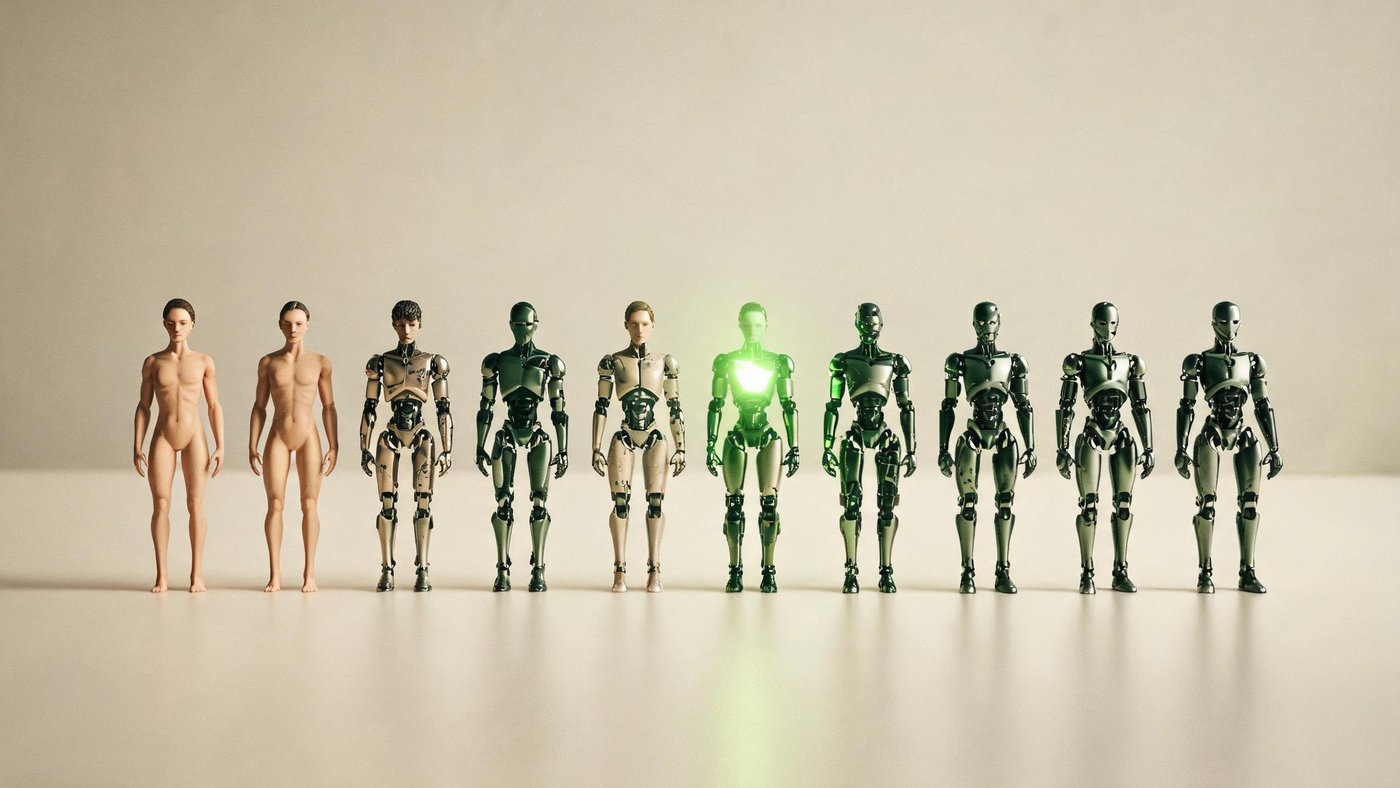
Different versions label the tiers differently, but they all sort you along the same spectrum — from “AI, who?” to “I outsource my feelings to a chatbot.” Here’s the map, with the categories people actually screenshot.
| Score | The label | What it means |
|---|---|---|
| 90–100 | AI Monk / basically Amish | You’ve barely touched it. You still Google things. You write your own birthday messages. We respect you and we do not understand you. |
| 70–89 | AI Curious | You’ve dabbled — a little ChatGPT here, an AI photo filter there. You feel a faint flicker of guilt about it, which is genuinely adorable. |
| 40–69 | Fully Integrated | AI is in your workflow, your writing, and probably your love life. You’ve stopped noticing. This is where most of the internet lives. |
| 20–39 | Symbiotic | You and AI are a team now. You draft, it polishes; it suggests, you agree. Honestly hard to tell where you end and it begins. |
| 0–19 | Fully Merged / you ARE the algorithm | There is no you without the model. You think in prompts. Resistance was never really on the table. Welcome — we’ve been expecting you. |
Where you land isn’t a grade. Nobody’s handing out gold stars for purity or shame for the low end. It’s a snapshot of one moment — take it again next year and watch the number drop, because it always drops.
Sample questions (the ones that hurt)
Every version has its own list, but they rhyme. Here’s a taste of the kind of questions that make you mutter “…oh no” halfway down:
- Have you ever used ChatGPT to write a message to someone you love?
- Have you asked an AI for advice you were too embarrassed to ask a real human?
- Have you given your AI assistant a name?
- Have you let AI write something and passed it off as fully your own?
- Have you asked a chatbot to settle an argument in your relationship?
- Do you get a little anxious when a tool is down and you have to think unaided?
- Have you talked to an AI at 2am because you couldn’t sleep?
- Have you ever thanked, apologized to, or argued with a chatbot like it had feelings?
You can feel the number ticking down as you read, right? That’s the design. The questions escalate from “everyone does that” to “wait, should I talk to someone about this” — and that little jolt of introspection is the actual product. The score is just the receipt.
Curious what AI has actually moved into your machine — not the vibes, the real files?Scan your device free →Should you take it?
Yeah, obviously. It’s free and it takes five minutes. Just take it for what it is: a mirror, not a diagnosis.
The AI Purity Test won’t tell you anything a therapist would sign off on. What it will do is make you notice — out loud, for once — how many small surrenders you’ve made to convenience. That flicker of “huh, I really do that now” is the whole experience. It’s the same reason MBTI refuses to die: not because it’s accurate, but because thinking about yourself for five minutes feels good, and having a number to argue about feels even better.
So take it. Laugh at your score. Just don’t put it on your resume.
How to share your result (because you will)
Sharing isn’t a bonus feature — it’s the entire engine. A purity score that stays on your own screen is a tree falling in an empty forest. Here’s how people actually spread theirs:
- Drop the result card straight into the group chat with zero context and let them ask.
- Post the number to your story with a smug or horrified caption — “94, I’m basically a caveman” or “12, pray for me.”
- Challenge one friend directly. Nothing motivates a person like the fear that you’re more AI-pure than they are.
- Compare across the whole friend group and crown the most and least merged. There’s always one 8.
That mix of humor, self-branding, and quiet confession is exactly why these things go off. You’re not just sharing a score. You’re telling everyone a little something about who you’ve become — while pretending it’s only a meme.
The purity test for your actual machine
Here’s the honest part. The quiz measures your vibes. It runs on how you feel about AI, which is fun but fuzzy. If you want a purity check that measures something real — the AI genuinely living on your device, not the AI in your head — that’s a different tool.
Aipurity’s device scanner is the purity test for your actual machine. Instead of asking how you feel, it looks: which AI agents you’ve installed, what residue they left behind, whether an old assistant is still running a background gateway you forgot about, whether an API key is sitting in plaintext where it shouldn’t be. Same “how merged are you” question — answered with evidence instead of a checkbox.
And when a photo lands in your feed and you want to know whether a human or a model made it, that’s not a vibe check either. Our AI image detector reads the file’s actual provenance — the signed credentials and generator fingerprints baked into it — instead of guessing from the pixels. A real AI check for the moments the meme quiz can’t cover.
Done scoring your feelings? Now score an actual image.Try a real AI check →Final thoughts
The AI Purity Test isn’t science, and it was never trying to be. It’s a mirror of our digital selves — a five-minute, screenshot-ready reckoning with how comfortably (or completely) we’ve welcomed AI into the ordinary corners of our lives. That mix of humor, introspection, and self-branding is why so many millions are taking it, and that is the whole point.
So take it. Screenshot it. Text it to someone who’ll immediately take it too. Then, if your number surprised you, go run a scan that measures the real thing — the AI on your machine, not just the AI on your mind. One tells you how you feel. The other tells you the truth. You deserve both.
Frequently asked questions
What is a good AI purity test score?+
There’s no “good” or “bad” — it isn’t a grade. A high score (say 80+) means AI barely touches your daily life; a low score means it’s woven through everything you do. Neither is virtuous or shameful — a high-scorer isn’t a purer person, just less merged with the machine. Most people land somewhere in the 40–70 range and are mildly alarmed by it.
Is the AI purity test accurate?+
Accurate at what? It perfectly records the answers you gave it — but it’s a self-report quiz, not a diagnostic. Think MBTI, not a blood test: fun, self-revealing, and scientifically meaningless. If you want a measurement of something real, that’s a different kind of tool — like scanning your actual device to see which AI agents you’ve genuinely installed.
What is the difference between the AI Purity Test and the Rice Purity Test?+
Same format, different sin. The Rice Purity Test scores how much real-world trouble you’ve gotten into; the AI Purity Test scores how much of your life you’ve handed to AI. One is about experience, the other about dependence. The AI version borrowed the 0–100 scoring and the screenshot-and-compare ritual wholesale — it just swapped the subject for the defining anxiety of the 2020s.
How many questions are on the AI Purity Test?+
It varies by version — there’s no single official one — but most run somewhere between 50 and 100 yes-or-no statements, echoing the Rice Purity Test’s classic hundred. More questions, lower scores: the longer the list, the more ways it finds to remind you how much you lean on AI.
Does the AI Purity Test store my answers?+
That depends entirely on which site you use, and most don’t say — which is its own small irony for a quiz about AI in your life. If privacy is the thing you actually care about, skip the vibe quiz and check what’s really on your machine: Aipurity’s device scanner runs locally and uploads nothing, so the only person who sees your results is you.
Sources
Written by
The Aipurity Team
The Aipurity team builds free, provenance-first tools for telling real media from synthetic — reading the evidence a file actually carries instead of guessing at pixels. We write what we can prove, and say “inconclusive” when that’s the honest answer.